

Farah Isse Hassan, the chairman of Somali Canadian federation & development distributing plastic sheets to one of Mogadishu IDP Camps, during seasonal rains and floods

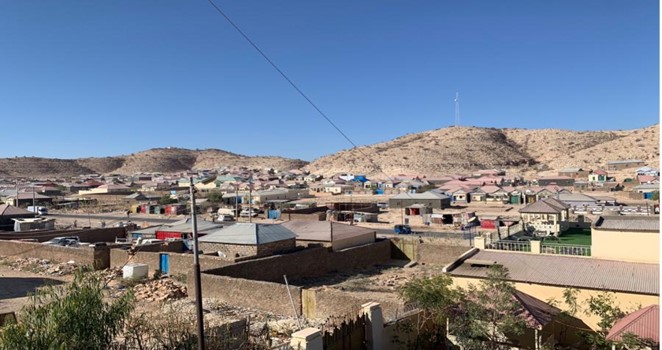
Shops on SSC Khatumo State

Las Anod
Monthly Briefing Report
Las Anod is strategically positioned in the Nugaal Valley. The city is almost surrounded by hills and has substantial water resources. Las anod has seen an increase in trade relations with the Puntland and Somaliland before the conflict. 70 per cent of commodities in the city originate from either Berbera or Bossaso port. Imported food commodities such as rice, sugar, wheat flour and bundles of packaged consumer goods, building materials, electronics, clothes and vegetables and fruits are the main commodities traded in Las anod. Las Anod has a hot arid climate with consistently very warm to hot temperatures and almost no rainfall except unpredictably in months of May and October.
Somali Canadian Federation & Development office in las anod Abdirisak Mohamud Ali (Ilkacase) on ground reported that more than, 90% of women, Elderly and innocent children, have been displaced by the fighting in Las Anod. On August 2023, Khatumo State forces achieved a decisive victory, successfully driving Somaliland forces out of Las Anod.
Its security is very reliable to facilitate any project for the benefit of marginalized community and its surrounding areas has plentiful natural resources such as agriculture and livestock products. unfortunately, Las Anod has not benefited from natural resources and it is one of the worst affected areas in Nugaal Valley. The above mentioned prolonged Conflict in Las Anod and the impact of changing hands of the area by one or another fighting groups had devastating effect on every aspect of the lives of the people in Las Anod.
Assessment Team Visited those Villages
- Taleex
- Xudun
- Tukaraq
- Godaalo
- Awrboogays
- Widhwidh
- Dhumay
- Xamar laguxidh
- Yagoori
- Guumays
- Saaxdheer
- Kalabaydh
Security and Access
from The 25th of August 2023, completes one year and six months since Somaliland armed forces were dislodged from Tukaraq and Goja- Cade by the SSC Khatumo forces. The security situation is still reliable, since its capture, those villages have not seen serious security problems. Somaliland armed forces, could not carryout killings, kidnapping, direct attacks or assassinations at even soft targets. due to full cooperation among the communities surrounding the area. The assessment team is of the opinion that humanitarian organizations, institutions and SSC khatumo concerned ministries have free access to operate in those villages at this point of time.
Objective of the assessment
To carryout rapid humanitarian needs assessment for the population in Las Anod and its sounding villages to determine the immediate humanitarian needs of the population and also identify the interventions needed to assist the affected people.
Methodology:
- Civil society groups
- Interviews with IDPs, returnees and host community
- Meetings with local community
- Observations
Food Security
The conflict and the banning of humanitarian organizations from the region by self-declared Somaliland and particularly from the villages at the border, has been the last straw that has broken the camel’s back on food security.
This practice has drained Las Anod of the cash injection it needed for job creation. Furthermore, business people who had resources and wanted to invest Las Anod in general were discouraged by the conflict and misguided policy on business people. Lack of food, sanitation, safe water and hygiene are the main concern.
Key findings
The prolonged conflict and drought has forced many people to go to Ethiopia and Jabuti to get relief assistance while others fled to neighboring regions for assistance furthermore, Since SSC khatuma forces capture did not receive substantial humanitarian assistance it needed most. logistic experts who were interviewed by the assessment team confirmed that there is no food available currently in those villages for the hungry people in the area, which include both IDPs, returnees and of the host community. as such, the food insecurity situation in those villages which was caused by the above complex crises has created a huge imbalance in the capacity of IDPs and poor people to meet their daily needs for survival. They changed their eating habits from three meals to one meal as a copying strategy.
Recommendations and follow up
- Co-ordination and information sharing:
- one of the challenging is lack of co-ordination at field level and limited information.
- None of local NGO’S or international organizations are based in Taleex, Xudun, Tukaraq, Godaalo, Awrboogays, Widhwidh, Dhumay, Xamar laguxidh, Yagoori, Guumays, Saaxdheer and Kalabaydh at the moment
- There is no consolidated report shared, despite assessment missions have been carried in the earlier days of liberation (2023)
- Provision of Non-Food Items (NFI):
- The IDPs require urgent assistance in acquiring essential items such as tents, blankets, and cooking utensils. These NFIs will provide them with temporary shelter and enable them to meet their basic needs.
- Livelihood Support-To help the affected population recover economically; livelihood support programs should be initiated. These programs can include training in new skills, providing access to micro-financing for small businesses, and assisting farmers with seeds and agricultural tools, since seasonal rains are expected.
- Adequate Lighting and Security- all IDPs visited doesn’t have lighting. Thus to install adequate lighting systems within IDP camps to ensure visibility during heavy rains at night. This will help prevent accidents and ensure the safety and security of IDPs. Maintain a strong security presence in the camp to mitigate any potential risks or exploitation during emergency situations.
- Immediate support in terms of NFIs, food aid, and livelihood assistance is vital to help the affected IDPs recover and rebuild their lives.
- It is important for humanitarian organizations and relevant stakeholders to mobilize resources and provide the necessary support to mitigate the long-term consequences of this disaster.
- Profiling/registration of IDPs, Returnees and the hosting community
- The condition and situation of the IDPs living there is 10 times worst then condition of IDPs in Las Anod just to compare. The IDP settlements we visited were so congested
Priority needs
- Distribution of E-vouchers
- Cash for work Activities
- Provide water storage Tanks
Tools used During assessments:
- food security
- health
- WASH and Shelter
Health
Background information of health
Before the 1990 civil war, Somalia had committed itself to improving its health services, program of Primary Health Care development. Plans for basic health services that were to focus on rural and nomadic populations. The health care delivery system, Health posts, maternal and child health centers, Primary Health Care Units, district hospitals, regional hospitals, general hospitals and specialized hospitals, a large percentage of these facilities were, however, neither functional nor operated at reasonable levels due to the blockage of Somaliland Administration poor economic management and emerging security problems in general. The region ranked near the bottom of infant mortality rates, due to that, natural disasters and epidemics (drought, flood, AWD, measles, malaria, TB cases increased. major health problems that caused the death of people were diarrhea and measles (For total death no medical proper records) They need health services because none of them don’t have access to sufficient health care in the area. They live at a risk point to an outbreak of cholera and communicable diseases.
Key findings
- improper of Public and private health services to respond to the health needs of the population in the villages visited by the assessment team
- Poor environmental sanitation, latrines and safe drinking water for the population which caused the emergence of communicable diseases like AWD
- Scarcity of food and shelters for most of the IDPs, returnees and host community
Recommendations
- supplementary feeding for the IDPs to reduce the morbidity and mortality of malnutrition
- Maternity and pediatric services as referral for severe cases to treat has to be set up soon
- Essential Package of Health Services (EPHS) has to initiate in Tukaraq and like-wise, healthcare center
- Immediate immunization campaigns among the children <5 to reduce vector borne diseases.
- Vaccines through centralized or sentinel site cold chain are urgently needed, with support from the concerned ministry, institutions or humanitarian organizations.
- treated mosquito nets to prevent malaria and other ill health
Note:
- Access to health care facilities remains very poor with levels of preventable diseases is high.
- There is only one M C H, in Saaxdheer, the building consists of three rooms with three miters covered with iron-sheet, during the day it is hot and humid.it isn’t suitable for emergency bleeding mother or child, mother in labour, pregnant and lactating mothers, can’t attend for medication or regular checkups. Medicines are stored inappropriate manner hot and sun-light. the desperate time is during delivery process, the midwife has no even hand-wash water before or after process of delivery (no electricity) for the period of emergency at night torch is used.
water for domestic use:
On average, each household uses 40 liters per day (two 20-liter jerry cans). With an average household of six members, each person uses 6 liters per day. The water is drawn mostly from unprotected shallow wells with low water yield. These wells are not treated and have poor drainage system. In addition to that, the water is very expensive for IDPs, returnees, pastoralists and poor communities (20 liters of water costs 14,000Ssh) which is equivalent 0.5 dollars
The common form of water storage is 20-liter plastic jerry cans. Each family has an average of two containers which are used for both collecting and storing the water, as such the capacity for the family to store water is very limited.
Water treatment:
During the assessment none of the respondents reported using treated water (neither chlorinated nor boiled)
Sanitation and Hygiene
- It plays an important role in improving a general health of the community
- It’s part of personal hygiene, for disposal of human feces
- it reduces the incidences of water related diseases
Latrine Facilities:
Latrines are almost none existent at the IDP settlements visited. There is no a single latrine inIDP residence. Most of the people,use bush for defecation. The residence elders & other members did show an understanding of the importance of constructing and using latrines even (communal latrines)
Access to soap:
- None of the respondents used of soap for washing hands after visiting the latrine and before eating.
- 46% of the IDPs, returnees and host community interviewed have access to soap and the importance of soap while the rest, did not have access to soap and did not know its use.
Preparation of ORS:
- None of the responds know how to prepare oral dehydration Salts (ORS)
Shelter / Housing
- most of IPDs, returnees and hosting community live in makeshift shelters made from worn out clothes and tattered plastic sheets.
Problems Noticed
- Extremely hot during the day
- Leakages during the rainy season
- Unsafe for keeping valuable items
- Susceptible to fires
- The living space is limited especially for large families
- Scorpions and snakes pose a threat to the family as they can easily enter the shelter and bite family members
Key findings:
- it is evident that the target areas are suffering from water scarcity linked to lack of access to water sources.
- Water scarcity has already negatively impacted these IDPS, returnees and host community as women and children are required to walk long distances to fetch water
- Poor sanitation facilities in all the residences surveyed results in poor hygiene practices and thus increases the risk of outbreaks in AWD
- This is aggravated by limited knowledge of proper sanitation and hygiene practices
- In adequate of shelter materials have negatively impacted on the well being of this community
Recommendations
- It is the recommendations of this report that meaningful investment in water, sanitation, shelter, hygiene programs are made
- The only meaningful of water source is borehole that can cover the needs of this population
- If borehole is drilled Water piping system should have done since there is significant distance between the beneficiary locations and water sources
- Development of new water sources using appropriate technology.
- It is the opinion of the team that boreholes be considered as an option particularly in the IDPs, returnees and host community dwellings
- Improving water infrastructure and service management, this will involve capacity building of local water management institutions (water user associations)
- Construction of household latrines at IDP camps and construction of institutional latrines
- Supply of hygiene kits to every household. Distribution of NFIs and shelter materials.
- Distribution of water storage containers.
- Carryout hygiene promotion campaigns all general and build the capacity of community hygiene volunteers (if any)
Last Activity


SSC Khatumo Women Umbrella


Agendas Discussed
- Advocacy and awareness campaigns to promote human rights education and awareness among the local population.
- Capacity building programs to empower women umbrella, local NGOs and civil society organizations to better advocate for human rights.
- Legal aid services to support victims of human rights abuses and help them seek justice.
- Economic empowerment through education and entrepreneurship is crucial.
- Education plays a pivotal role in women’s empowerment.
- Help every girl and woman feel valued.
- Defend themselves against these injustices with different kinds of empowerment, such as social, economic, educational, political and psychological
- Ensuring clean water access for better lives.
- Harmful practices such as dowry, bride price, polygamy and female genital mutilation/cutting
- Child labour and abuse
- Trafficking, including sex trafficking and international marriage brokering.
- Access to education, healthcare and social securities.
Farah Isse Hassan, the chairman of Somali Canadian federation & development in Muqdisho, felt concern on prolonged conflicts, a harsh climate, absence of a recognized government, and unreliable markets have resulted in a huge loss of Pastarolist,livestock. Fresh returnees as well as older returnees lack alternative job skills, education, and thus face a grim economic future, The rapid influx of returnees, without a sufficient and stable employment sector, has rendered large number of SSC Khatumo vulnerable to economic uncertainties.
Women umbrella in SSC Khatumo, noted that children in SSC Khatumo face horrific abuses, including forced recruitment as soldiers, forced marriage and rape, by the parties to the conflict. Those responsible are never held to account.
Nacimo from Talo-wadaag Women representative , Criminalize the recruitment and use of children by armed forces and issue a military order to stop and prevent child recruitment. Investigate and prosecute those who recruit and use children.
TALEEX

XUDUN

TUKARAQ

GODAALE

AWRBOOGEYS

WIDHWIDH

Dhummay

XAMAR LAGU XIDH

YAGOORI

GUUMAYS

SAAXDHEER

KABAYDH


Thanks for some other informative site. Where else may I get that kind of information written in such a perfect method? I have a project that I’m just now working on, and I’ve been on the glance out for such info.
contact us by email:somalicanadianfederation@gmail.com